Updated: 24 November 2026 · ZEEDDENT information article, based on the studies cited at the end · 7 min read
According to the most recent meta-analysis, published in 2026, zirconia and metal-ceramic dental crowns have very similar 5-year survival rates: 97.3% for layered (ceramic-veneered) zirconia, 96.8% for monolithic zirconia and 97.1% for metal-ceramic crowns. The real differences lie in aesthetics, the risk of chipping and the location of the tooth.
In this article, we explain in simple terms what each material means and how we choose the right option at ZEEDDENT.
At a glance
- A dental crown completely covers a damaged tooth, restoring its shape, strength and appearance.
- At 5 years, zirconia and metal-ceramic crowns have similar survival rates of approximately 97%.1
- Monolithic crowns, made from a single block of material, chip significantly less often than ceramic-veneered ones.1
- Zirconia contains no metal, so there is no grey line at the gum line, which often appears over time with metal-ceramic crowns.2
- At ZEEDDENT, prices are: layered zirconia €440, zirconia €350, metal-ceramic €250 per tooth.
What is a dental crown and when do you need one?
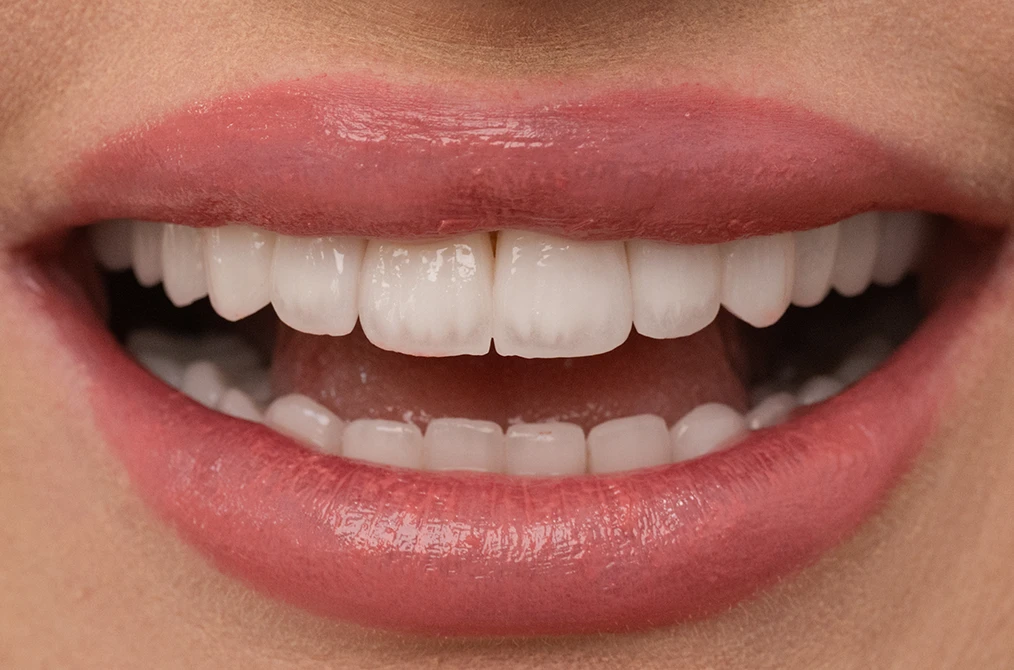
A dental crown is a restoration that completely covers the visible part of a tooth. It is recommended when a tooth is too damaged for a filling, after root canal treatment on a back tooth, when there are cracks or fractures, or when a tooth needs to be restored both aesthetically and functionally. A crown can also be placed on a dental implant.
Unlike a veneer, which covers only the visible front of the tooth, a crown encases the tooth on all sides and absorbs chewing forces.
The three materials, in brief
| Material | Structure | Strengths | ZEEDDENT price |
|---|---|---|---|
| Layered zirconia | Zirconia framework covered with layered ceramic | Very natural appearance, translucency, suitable for front teeth | €440 per tooth |
| Monolithic zirconia | A single block of zirconia | High strength, low risk of chipping, suitable for back teeth | €350 per tooth |
| Metal-ceramic | Metal framework covered with ceramic | Classic solution with a long track record, lower cost | €250 per tooth |
All prices are also listed on the Rates page.
What do the latest studies say?
In 2026, a meta-analysis published in the International Journal of Prosthodontics reviewed 64 studies, including over 3,500 metal-ceramic crowns and over 8,000 all-ceramic crowns.1 The 5-year survival rates were:
- 98.5% for monolithic lithium disilicate crowns;
- 97.3% for layered zirconia;
- 97.1% for metal-ceramic crowns;
- 96.8% for monolithic zirconia.
The authors concluded that zirconia and lithium disilicate crowns have survival rates comparable to metal-ceramic crowns, while monolithic designs reduce the risk of fracture and chipping.1
This is a significant change from 2015, when an analysis by the same research group advised caution with zirconia because of chipping of the veneering ceramic.3 Materials and techniques have improved, and current data confirm it.
Aesthetics: why the absence of metal matters
With metal-ceramic crowns, the metal framework may become visible over time as a grey line at the gum line, particularly if the gums recede. Zirconia is white and does not have this drawback. In an analysis of implant-supported crowns, zirconia crowns had fewer aesthetic complications than metal-ceramic ones.2
For teeth in the smile zone, we generally recommend layered zirconia, while for molars, where forces are high, monolithic zirconia is an excellent choice.

Dental crowns at ZEEDDENT
At ZEEDDENT, the choice of material depends on the position of the tooth, the colour of the neighbouring teeth, chewing forces and habits such as bruxism. Until the final crown is cemented, the tooth is protected with a temporary restoration made in the clinic.
If the tooth first needs root canal treatment, this is done under the microscope, and the crown is made after healing. For the aesthetics of front teeth, many cases can be solved more conservatively with dental veneers. Appointments can be booked via the Contact page.
FAQ
Frequently asked questions about dental crowns
What patients ask us most often before having a dental crown.
The latest data show a 5-year survival rate of approximately 97%, comparable to metal-ceramic crowns. With good oral hygiene and regular check-ups, a crown can last well beyond this period.
In terms of durability, they are very similar. Zirconia has the aesthetic advantage of being metal-free and does not leave a grey line at the gum line. Metal-ceramic remains a valid option at a lower cost.
Chipping occurs more often with ceramic-veneered crowns than with monolithic ones. For this reason, on molars or for patients with bruxism, we often recommend monolithic zirconia and a protective night guard.
For back teeth, which bear heavy loads, a crown is often recommended after root canal treatment to protect the tooth from fracture. The decision depends on how much tooth structure remains.
Layered zirconia costs €440, zirconia €350 and metal-ceramic €250 per tooth. A temporary restoration made in the clinic costs €20.
Today, choosing a dental crown no longer means a trade-off between strength and aesthetics. Both zirconia and metal-ceramic crowns deliver very good medium-term results, and monolithic designs reduce the risk of chipping.
The right material is chosen individually, depending on the tooth and the patient. The first step is a consultation, during which we assess the tooth and present the options, with the advantages and costs of each.
Scientific sources
- Pjetursson BE, Pitta J, Balet A et al.. A Systematic Review and Meta-analysis Evaluating the Survival, Failure, and Complication Rates of Metal-Ceramic, Veneered, and Monolithic All-Ceramic Tooth-Supported Single Crowns, Part 1. International Journal of Prosthodontics, 2026. pubmed.ncbi.nlm.nih.gov/41489982/
- Pjetursson BE, Valente NA, Strasding M et al.. A systematic review of the survival and complication rates of zirconia-ceramic and metal-ceramic single crowns. Clinical Oral Implants Research, 2018. pubmed.ncbi.nlm.nih.gov/30328190/
- Sailer I, Makarov NA, Thoma DS et al.. All-ceramic or metal-ceramic tooth-supported fixed dental prostheses? A systematic review of the survival and complication rates. Part I: Single crowns. Dental Materials, 2015. pubmed.ncbi.nlm.nih.gov/25842099/
Read also
- Ceramic or composite dental veneers: why we recommend ceramic from the outset
- Microscope root canal treatment: what changes and why it matters
This article is for information only and does not replace a consultation. A treatment plan can only be established after a clinical examination and the necessary investigations.