Updated: 24 November 2026 · ZEEDDENT information article, based on the studies cited at the end · 8 min read
According to long-term clinical studies, ceramic dental veneers are a more aesthetically stable and durable solution than composite veneers: after 10 years, ceramic veneers have survival rates of 95-100%, whilst composite veneers are more prone to staining, loss of lustre and failures requiring replacement.
At ZEEDDENT, we do not recommend composite veneers as a permanent aesthetic solution. Below, we explain why, based on the latest scientific data and our experience with over 7,000 veneer cases.
At a glance
- Ceramic veneers have an estimated 10-year survival rate of 95.5%, according to an analysis of over 6,500 veneers.1
- In a 10-year randomised clinical trial, ceramic veneers had a 100% survival rate, whilst indirect composite veneers had a 75% survival rate.2
- The most common problems with composite materials are surface roughness, colour mismatch and staining at the edges.3
- The risk of failure for composite veneers is approximately four times higher than for ceramic ones.4
- ZEEDDENT’s recommendation: opt for ceramic veneers from the outset to avoid having to redo the work and paying twice.
What are dental veneers and what types are there?
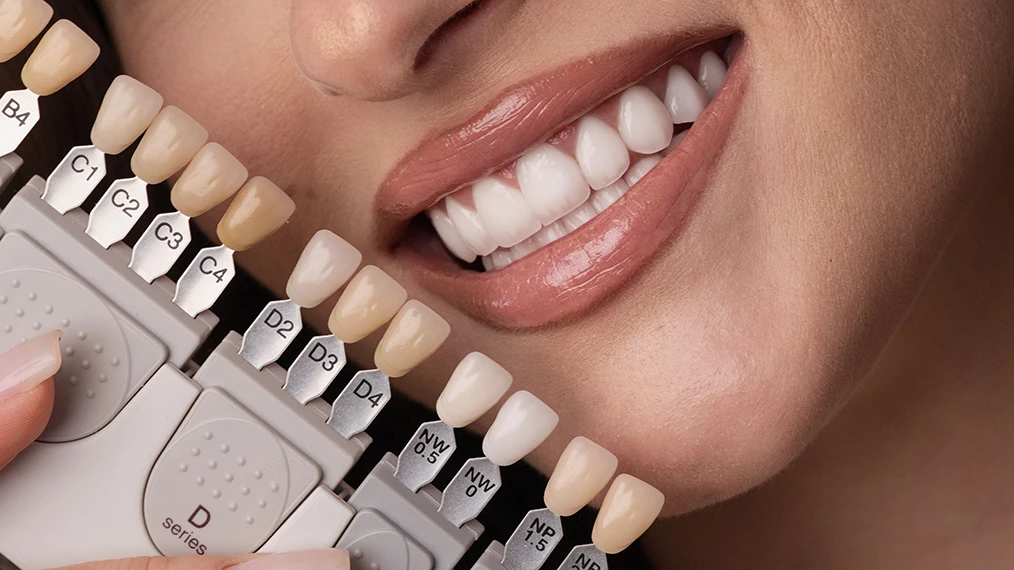
Dental veneers are thin layers of material bonded to the visible surface of the teeth, which correct the colour, shape, size or minor irregularities of the smile. In practice, two main categories of materials are used:
- Ceramic veneers, made in a laboratory from a dense, durable ceramic material that reflects light in a similar way to natural enamel.
- Composite veneers, made from a resin containing filler particles, moulded directly onto the tooth or in the laboratory.
The difference between them is not visible on the first day. It becomes apparent after 2, 5 or 10 years, and the studies on this are clear.
What do long-term studies show?
We have selected the most relevant published research, from randomised clinical trials to analyses of thousands of veneers:
| Study | What it compared | Main result |
|---|---|---|
| Alenezi et al., J Clin Med, 20211 | 6,500 ceramic veneers, 25 studies | Estimated 10-year survival rate: 95.5% |
| Gresnigt et al., J Dent, 20192 | Ceramic versus indirect composite, same patient | At 10 years: 100% ceramic, 75% composite. All 6 failures were with composite |
| Lim et al., J Evid Based Dent Pract, 20233 | Meta-analysis of composite veneers | Cumulative survival 88%; complications: roughness, colour mismatch, marginal staining |
| Mazzetti et al., Dent Mater, 20224 | 1,459 veneers followed for 10 years in practice | Annual failure rate: 4.1% for composite, 1.2% for ceramic; risk of failure 4 times higher for composite |
In the Gresnigt study, even composite veneers that lasted 10 years were significantly more likely to have poorer colour matching, a rougher surface, fractures and wear.2
Why does composite stain over time?
Composite is a resin. Even the best composites have a surface which, over time, absorbs pigments from coffee, tea, wine or tobacco and loses its shine. Ceramic is a vitrified, almost non-porous material that does not stain in the same way.
The main problem arises at the margin between the material and the enamel. This is where bacterial plaque and pigments accumulate, and the bonding line becomes visible. A 2023 meta-analysis confirms that marginal staining is among the most commonly reported complications of composite veneers.3
An easy-to-understand example comes from orthodontics. White spots caused by enamel demineralisation frequently appear around brackets bonded to the teeth: a 2025 analysis of over 9,000 patients shows that these occur in approximately 55% of patients treated with fixed braces.5 Any material bonded to enamel creates a junction area that requires careful maintenance. That is why we prefer a material that remains stable, resists staining and has fine, laboratory-finished edges.
Prep or no-prep veneers: what is the difference?
Ceramic veneers can be produced in two ways:
- Prep: the tooth surface is prepared minimally, usually within the enamel only, so that the veneer has sufficient thickness and a natural contour.
- No-prep: the veneer is bonded without preparation or with minimal preparation, where the shape and position of the teeth allow this.
The choice is not a matter of preference, but of clinical assessment: the position of the teeth, the base colour and the amount of available enamel. A 2021 systematic review also showed that veneer design matters, with veneers that cover the incisal edge having fewer failures.1
Ceramic veneers at ZEEDDENT
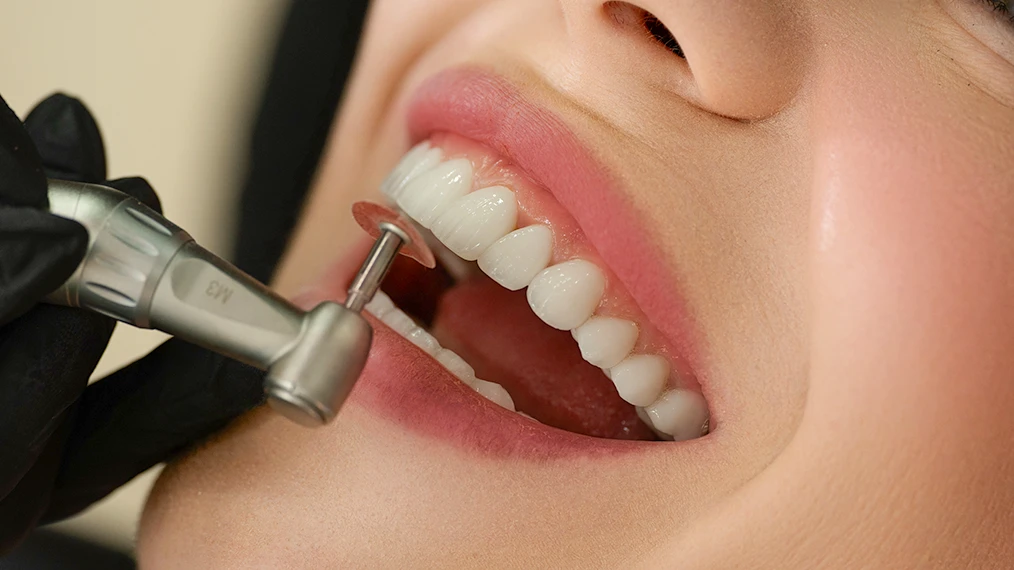
ZEEDDENT is a clinic specialising in cosmetic dentistry, with over 7,000 veneer cases. The treatment involves six stages: the cosmetic consultation, choosing the type of veneer best suited to your facial features, minimal tooth preparation, impressions and a bespoke design, the final application, and a follow-up with maintenance recommendations. Further details can be found on the Dental Veneers page.
Prices for all-ceramic veneers and crowns range from €350 to €440 per tooth, depending on the material, whilst temporary restorations made in the clinic cost €20. The full list is available on the Rates page. You can view real results in the Cases section.
Our recommendation is simple: if you are considering veneers, opt for a ceramic solution from the outset. Composite veneers may seem cheaper at first, but having them redone after a few years usually results in a higher overall cost.
FAQ
Frequently asked questions about dental veneers
Brief answers to the questions we are asked most often during cosmetic dentistry consultations.
Long-term studies estimate a 10-year survival rate of approximately 95% for ceramic veneers. The actual lifespan depends on oral hygiene, regular check-ups and habits such as bruxism, for which we recommend a protective night guard.
Composite loses its shine, picks up stains and its edges discolour over time. Studies show that the risk of failure is approximately four times higher than with ceramic. For a stable aesthetic result, we recommend ceramic from the outset.
No, provided the veneers are properly fitted and well maintained. An analysis of 6,500 ceramic veneers showed that failures due to secondary caries or the need for root canal treatment were very rare, below 1% at 10 years.
No. Whitening only acts on natural enamel, not on ceramic or composite. Therefore, if you also want whitening, it is done before the veneers, and the colour of the veneers is chosen based on the whitening result.
All-ceramic veneers and crowns cost between €350 and €440 per tooth, depending on the material. The exact treatment plan and number of veneers are determined during the cosmetic consultation.
Dental veneers are a long-term investment in your smile. Scientific literature shows that ceramic offers superior colour stability and durability compared to composite, and the difference becomes apparent after the first few years.
At ZEEDDENT, we recommend ceramic veneers from the outset, carefully planned and tailored to each patient’s facial features. The first step is a cosmetic consultation, during which we analyse the shape, colour and alignment of the teeth.
Scientific sources
- Alenezi A, Alsweed M, Alsidrani S, Chrcanovic BR. Long-Term Survival and Complication Rates of Porcelain Laminate Veneers in Clinical Studies: A Systematic Review. Journal of Clinical Medicine, 2021. pubmed.ncbi.nlm.nih.gov/33807504/
- Gresnigt MMM, Cune MS, Jansen K, van der Made SAM, Özcan M. Randomized clinical trial on indirect resin composite and ceramic laminate veneers: Up to 10-year findings. Journal of Dentistry, 2019. pubmed.ncbi.nlm.nih.gov/31181242/
- Lim TW, Tan SK, Li KY, Burrow MF. Survival and complication rates of resin composite laminate veneers: a systematic review and meta-analysis. Journal of Evidence-Based Dental Practice, 2023. pubmed.ncbi.nlm.nih.gov/38035903/
- Mazzetti T, Collares K, Rodolfo B, Rodolpho PAR, van de Sande FH, Cenci MS. 10-year practice-based evaluation of ceramic and direct composite veneers. Dental Materials, 2022. pubmed.ncbi.nlm.nih.gov/35379471/
- Hussain U, Wahab A, Kamran MA et al.. Prevalence, Incidence and Risk Factors of White Spot Lesions Associated With Orthodontic Treatment: A Systematic Review and Meta-Analysis. Orthodontics & Craniofacial Research, 2025. pubmed.ncbi.nlm.nih.gov/39717964/
Read also
- Dental crown: zirconia, layered zirconia or metal-ceramic?
- Professional teeth whitening: safety, sensitivity and how long results last
This article is for information only and does not replace a consultation. A treatment plan can only be established after a clinical examination and the necessary investigations.